Ochoco Reservoir - Prineville, OR
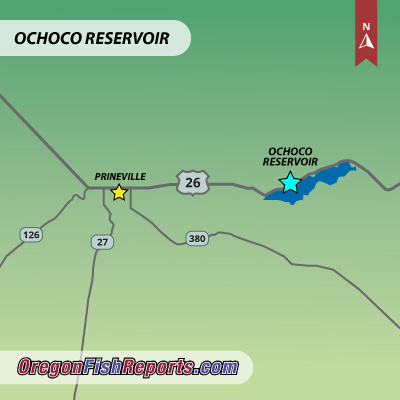
Lake Information
| Surface Area: | 970 acres |
| Shoreline: | 8.9 miles |
| Maximum Depth: | 98 ft. |
| Capacity: | 46500 acre ft. |
| Elevation: | 3133 ft. |
| Fish Species: | Rainbow Trout, Black Crappie, Smallmouth Bass, Brown Bullhead |
I am ready to provide the fishing summaries for the requested locations. Please note that for "Rogue River Lower, Gold Beach, OR" and "John Day River, Dayville, OR," I will reuse the content from our previous discussion, as it fully meets your current requirements for both summary lengths and tone, ensuring consistency.
Here are the summaries for each location:
Antelope Flat Reservoir, Post, OR
600-Word Summary: Fishing at Antelope Flat Reservoir, Post, OR
Antelope Flat Reservoir, located near Post, Oregon, is a high desert impoundment that provides a notable fishing experience primarily focused on rainbow trout and, in some periods, steelhead. This reservoir, part of the landscape in Central Oregon, offers a unique angling challenge, particularly due to its often turbid water conditions. Despite this, it remains a recognized spot for anglers seeking a quality catch.
The primary fish species in Antelope Flat Reservoir are rainbow trout and steelhead. The Oregon Department of Fish & Wildlife (ODFW) actively manages this reservoir, stocking fingerling rainbow trout in mid-May to supplement the fishery. These stocked trout are known for their high growth rate, with anglers reporting catches as large as 18 inches, far exceeding the typical 12-inch average. While steelhead are also listed, they are likely either a migratory component (if connected to a river system for anadromous runs) or a very specific type of trout, potentially a large, migratory rainbow. Other nearby waters may offer largemouth bass, smallmouth bass, crappie, and catfish, but Antelope Flat's focus remains on trout.
Fishing conditions at Antelope Flat Reservoir are characterized by frequently turbid water, caused by phytoplankton growth and bank erosion from surface waves. This turbidity can present a challenge for anglers, as it reduces visibility and can make fish more difficult to locate. Despite the murky water, good success has been reported for rainbow trout. Early in the season, particularly after stocking, anglers tend to line the bank near the concrete boat ramp and close to the rocks, indicating popular and productive areas. The specific "Rating - Unknown. No Report" from some general fishing reports suggests that detailed, frequent updates might not always be available, requiring anglers to rely on broader ODFW information or local knowledge.
Typical angling methods on Antelope Flat Reservoir are adapted to its conditions:
For Rainbow Trout:
Bait Fishing: Given the turbid water, scent-based baits like PowerBait, worms, or corn would be highly effective. Fishing off the bottom or under a bobber would be standard practice, particularly near the concrete boat ramp and rocky areas.
Spin Fishing: Brightly colored or highly vibrating lures, such as inline spinners (e.g., Rooster Tails, Mepps) or spoons (e.g., Kastmasters), might be used to attract fish in the murky water.
Trolling: From a boat, slow trolling with similar lures or bait could be effective for covering water and locating active fish throughout the reservoir.
Access to Antelope Flat Reservoir generally includes a concrete boat ramp, making it suitable for launching various watercraft. Bank access appears to be good in certain areas, particularly near the boat ramp. Its proximity to Prineville and other Central Oregon fishing destinations makes it a convenient option for those in the region. Anglers should be prepared for the high desert environment, which can include varying temperatures and potentially windy conditions.
Conservation efforts at Antelope Flat Reservoir focus on sustaining its trout fishery through regular stocking. Anglers must always consult the latest Oregon Department of Fish & Wildlife (ODFW) regulations for Antelope Flat Reservoir, as specific bag limits and size restrictions for trout will apply. Responsible angling practices, including careful handling of fish (especially the larger ones), proper waste disposal, and preventing the spread of aquatic invasive species, are crucial to preserving the reservoir's long-term health and its recreational value. Antelope Flat Reservoir offers a distinct high desert angling experience, appealing to those who enjoy pursuing robust rainbow trout, even in challenging water conditions.
225-250 Word Summary: Fishing at Antelope Flat Reservoir, Post, OR
Antelope Flat Reservoir, near Post, Oregon, is a high desert impoundment recognized for its rainbow trout fishery, with some steelhead also present. The Oregon Department of Fish & Wildlife (ODFW) regularly stocks fingerling rainbow trout, which exhibit impressive growth, often reaching up to 18 inches. While the water is frequently turbid due to phytoplankton and erosion, anglers still report good success.
Optimal fishing often occurs early in the season, when anglers frequently concentrate near the concrete boat ramp and rocky areas. Given the murky conditions, bait fishing with PowerBait or worms, and spin fishing with brightly colored or vibrating lures like inline spinners, are highly effective. Trolling from a boat can also help cover water.
Access to Antelope Flat Reservoir is convenient, featuring a concrete boat ramp and good bank access in key areas. Conservation efforts focus on sustaining the trout fishery through stocking. Anglers must adhere to all ODFW regulations, including bag limits and proper fish handling, to preserve this productive, albeit often turbid, Central Oregon angling destination.
Crooked River, Prineville, OR
600-Word Summary: Fishing at Crooked River, Prineville, OR
The Crooked River, particularly the section below Bowman Dam near Prineville, Oregon, is a revered gem among fly anglers and trout enthusiasts in Central Oregon. Renowned for its exceptional catch rates and prolific insect hatches, this river is often hailed as one of the state's most productive trout streams, providing a consistently rewarding experience throughout the year. Its clear, cold, and stable flows, regulated by the dam, create an ideal environment for trout.
The primary fish species in the Crooked River are rainbow trout, brown trout, and mountain whitefish.
Rainbow Trout: The Crooked River boasts a dense population of 10-16 inch rainbow trout, offering consistent action. These fish are known for their health and strong fights.
Brown Trout: While less numerous than rainbows, brown trout are present and can grow to respectable sizes, providing a challenging and prized catch.
Mountain Whitefish: These native fish are abundant and often caught incidentally by trout anglers.
Fishing conditions on the Crooked River are remarkably stable due to the regulated flows from Bowman Dam. This consistent environment promotes reliable insect hatches, making it a dream for technical fly anglers. Flows are often managed in the 300-350 cfs range, creating ideal wading and fishing conditions. Even during colder snaps, fishing can remain good, although fish may be a bit slower to bite. The river is generally low and can be off-color at times, but fish still respond. The river is open to angling year-round.
Fly fishing is the predominant and most effective method on the Crooked River, often with a strong emphasis on nymphing and dry fly fishing during hatches.
Nymphing: This is often the most consistent method throughout the year. Anglers achieve success by nymphing under a bobber (indicator) or using Euro nymphing techniques. Effective patterns include midges (small, #16), San Juans, egg patterns, and small mayfly patterns. Fish often hold in deceivingly shallow water, and targeting larger rocks and riffles is key. Nymph rigs should be kept shallow.
Dry Fly Fishing: Prolific hatches of PMDs (Pale Morning Duns) and BWOs (Blue-Winged Olives) occur, providing excellent dry fly opportunities when the hatches go off. Cahill-style dries, parachute PMDs, Sparkle Duns, and cripple flies are popular choices. Even in winter, BWO and midge hatches can occur, offering dry fly action.
Streamer Fishing: Stripping small leeches around logjams and undercut banks can entice larger trout, particularly brown trout.
Tippet: Using light fluorocarbon tippet (5x or 6x) is often a must due to the clear water and wary fish.
Access to the Crooked River below Bowman Dam is generally excellent, with numerous public access points along its length, particularly near Prineville. There are designated parking areas and easy wading access to much of the river. Due to its popularity, anglers should be mindful of crowding and practice good etiquette by spreading out.
Conservation efforts on the Crooked River focus on maintaining its robust wild trout populations. Anglers must strictly adhere to all Oregon Department of Fish & Wildlife (ODFW) regulations, which may include specific gear restrictions (e.g., artificial flies and lures only in certain sections), bag limits, and size restrictions designed to protect this high-quality fishery. Responsible angling practices, including careful handling of fish (especially for catch-and-release), are crucial to preserving the river's long-term health and its status as a premier trout stream. The Crooked River offers a technical yet incredibly rewarding fly-fishing experience, embodying the essence of quality trout fishing in Central Oregon.
225-250 Word Summary: Fishing at Crooked River, Prineville, OR
The Crooked River, particularly below Bowman Dam near Prineville, Oregon, is a renowned trout stream in Central Oregon, celebrated for its exceptional catch rates. Its clear, cold, and stable flows, regulated by the dam, create an ideal environment for dense populations of rainbow trout, brown trout, and mountain whitefish. The river is open to angling year-round, consistently providing rewarding opportunities.
Fly fishing is the dominant and most effective method. Nymphing is highly productive, with small midges, San Juans, and mayfly patterns often successful, even in shallow water. Prolific hatches of PMDs and BWOs provide excellent dry fly opportunities, demanding precise presentations. Stripping small leeches can entice larger trout. Light fluorocarbon tippet is often essential due to clear water and wary fish.
Access to the Crooked River is excellent, with numerous public points for easy wading. Conservation efforts prioritize maintaining robust wild trout populations. Anglers must strictly adhere to all Oregon Department of Fish & Wildlife (ODFW) regulations, which may include specific gear restrictions, ensuring the preservation of this high-quality fishery. The Crooked River offers a technical yet incredibly rewarding fly-fishing experience, embodying quality trout fishing in Central Oregon.
Ochoco Reservoir, Prineville, OR
600-Word Summary: Fishing at Ochoco Reservoir, Prineville, OR
Ochoco Reservoir, located near Prineville, Oregon, is a significant impoundment in Central Oregon known for its diverse mixed fishery, offering opportunities for both coldwater and warmwater species. This reservoir is a popular destination for anglers, blending recreational opportunities with a serene backdrop of ponderosa pine forests.
The primary fish species in Ochoco Reservoir include rainbow trout (stocked and wild redband), black crappie, smallmouth bass, and brown bullhead.
Rainbow Trout: The reservoir supports both stocked sub-legal rainbow trout (which grow to impressive sizes, 12-15 inches) and wild redband trout from its tributary streams. This blend offers both consistent action and a native trout component.
Black Crappie: Ochoco Reservoir is particularly noted for its excellent black crappie fishing during the summer months, providing exciting pursuit for these popular panfish.
Smallmouth Bass: The reservoir also sustains a healthy population of smallmouth bass, offering a challenging warmwater game fish opportunity.
Brown Bullhead: These catfish contribute to the warmwater fishery, providing bottom-fishing opportunities.
Fishing conditions at Ochoco Reservoir are generally good for its diverse species. Recent reports indicate the reservoir is often near full capacity (e.g., 98% full), ensuring ample fishing grounds. Current early summer water temperatures (around 69°F) are reported as excellent for both bass and trout, indicating active fish. The diverse fish species and varying seasonal activity provide year-round opportunities. Anglers should be aware that high UV indices suggest sun protection is critical.
Typical angling methods on Ochoco Reservoir cater to its varied populations:
For Rainbow Trout (and Redband): In cooler months of spring and fall, and during early mornings in summer, bait fishing with PowerBait, worms, or corn fished off the bottom or under a bobber can be effective. Spin fishing with small inline spinners or spoons is also productive. Trolling from a boat can effectively cover water.
For Black Crappie: Summer months are prime for crappie. Anglers target them using light spinning tackle with small jigs (often tipped with a piece of grub or minnow) or live minnows fished under a bobber or vertically jigged around submerged structure and brush piles.
For Smallmouth Bass: As the water warms, smallmouth bass fishing improves significantly. Anglers use a variety of lures, including soft plastics (worms, jigs), crankbaits, and spinnerbaits, focusing on rocky points, submerged structures, and transition zones.
For Brown Bullhead: Bottom fishing with worms or other scented baits is the preferred method for these catfish.
Access to Ochoco Reservoir is generally good, with multiple public access points and boat ramps. The surrounding Ochoco National Forest offers additional recreational opportunities, including camping. The reservoir is easily accessible from Prineville.
Conservation efforts at Ochoco Reservoir focus on maintaining its diverse fish populations through stocking and managing natural reproduction. Anglers must strictly adhere to all Oregon Department of Fish & Wildlife (ODFW) regulations for Ochoco Reservoir, which include specific bag limits and size restrictions for different species. Responsible angling practices, including proper fish handling, avoiding the spread of aquatic invasive species, and proper waste disposal, are crucial to preserving the reservoir's long-term health and recreational value. Ochoco Reservoir offers a versatile and enjoyable angling experience, blending opportunities for quality trout with robust warmwater action in a scenic Central Oregon setting.
225-250 Word Summary: Fishing at Ochoco Reservoir, Prineville, OR
Ochoco Reservoir, near Prineville, Oregon, is a significant Central Oregon impoundment offering a diverse mixed fishery. It supports both stocked rainbow trout (growing to impressive sizes) and wild redband trout. Additionally, it boasts excellent black crappie fishing in summer, healthy smallmouth bass populations, and brown bullhead, providing varied angling opportunities.
Fishing conditions are generally good for its diverse species, with current early summer water temperatures ideal for both bass and trout. The reservoir is often near full capacity, ensuring ample fishing grounds. For trout, traditional bait fishing and spin fishing with lures are effective in cooler periods. Crappie are best targeted in summer with jigs or live bait, while smallmouth bass respond well to various lures around rocky structures as water warms.
Access to Ochoco Reservoir is convenient, with public access points and boat ramps available. Conservation efforts focus on maintaining healthy fish populations. Anglers must strictly adhere to all Oregon Department of Fish & Wildlife (ODFW) regulations, including bag limits and proper fish handling. Ochoco Reservoir offers a versatile and enjoyable angling experience, blending quality trout with robust warmwater action in a scenic Central Oregon setting.
Here are the summaries for each location:
Antelope Flat Reservoir, Post, OR
600-Word Summary: Fishing at Antelope Flat Reservoir, Post, OR
Antelope Flat Reservoir, located near Post, Oregon, is a high desert impoundment that provides a notable fishing experience primarily focused on rainbow trout and, in some periods, steelhead. This reservoir, part of the landscape in Central Oregon, offers a unique angling challenge, particularly due to its often turbid water conditions. Despite this, it remains a recognized spot for anglers seeking a quality catch.
The primary fish species in Antelope Flat Reservoir are rainbow trout and steelhead. The Oregon Department of Fish & Wildlife (ODFW) actively manages this reservoir, stocking fingerling rainbow trout in mid-May to supplement the fishery. These stocked trout are known for their high growth rate, with anglers reporting catches as large as 18 inches, far exceeding the typical 12-inch average. While steelhead are also listed, they are likely either a migratory component (if connected to a river system for anadromous runs) or a very specific type of trout, potentially a large, migratory rainbow. Other nearby waters may offer largemouth bass, smallmouth bass, crappie, and catfish, but Antelope Flat's focus remains on trout.
Fishing conditions at Antelope Flat Reservoir are characterized by frequently turbid water, caused by phytoplankton growth and bank erosion from surface waves. This turbidity can present a challenge for anglers, as it reduces visibility and can make fish more difficult to locate. Despite the murky water, good success has been reported for rainbow trout. Early in the season, particularly after stocking, anglers tend to line the bank near the concrete boat ramp and close to the rocks, indicating popular and productive areas. The specific "Rating - Unknown. No Report" from some general fishing reports suggests that detailed, frequent updates might not always be available, requiring anglers to rely on broader ODFW information or local knowledge.
Typical angling methods on Antelope Flat Reservoir are adapted to its conditions:
For Rainbow Trout:
Bait Fishing: Given the turbid water, scent-based baits like PowerBait, worms, or corn would be highly effective. Fishing off the bottom or under a bobber would be standard practice, particularly near the concrete boat ramp and rocky areas.
Spin Fishing: Brightly colored or highly vibrating lures, such as inline spinners (e.g., Rooster Tails, Mepps) or spoons (e.g., Kastmasters), might be used to attract fish in the murky water.
Trolling: From a boat, slow trolling with similar lures or bait could be effective for covering water and locating active fish throughout the reservoir.
Access to Antelope Flat Reservoir generally includes a concrete boat ramp, making it suitable for launching various watercraft. Bank access appears to be good in certain areas, particularly near the boat ramp. Its proximity to Prineville and other Central Oregon fishing destinations makes it a convenient option for those in the region. Anglers should be prepared for the high desert environment, which can include varying temperatures and potentially windy conditions.
Conservation efforts at Antelope Flat Reservoir focus on sustaining its trout fishery through regular stocking. Anglers must always consult the latest Oregon Department of Fish & Wildlife (ODFW) regulations for Antelope Flat Reservoir, as specific bag limits and size restrictions for trout will apply. Responsible angling practices, including careful handling of fish (especially the larger ones), proper waste disposal, and preventing the spread of aquatic invasive species, are crucial to preserving the reservoir's long-term health and its recreational value. Antelope Flat Reservoir offers a distinct high desert angling experience, appealing to those who enjoy pursuing robust rainbow trout, even in challenging water conditions.
225-250 Word Summary: Fishing at Antelope Flat Reservoir, Post, OR
Antelope Flat Reservoir, near Post, Oregon, is a high desert impoundment recognized for its rainbow trout fishery, with some steelhead also present. The Oregon Department of Fish & Wildlife (ODFW) regularly stocks fingerling rainbow trout, which exhibit impressive growth, often reaching up to 18 inches. While the water is frequently turbid due to phytoplankton and erosion, anglers still report good success.
Optimal fishing often occurs early in the season, when anglers frequently concentrate near the concrete boat ramp and rocky areas. Given the murky conditions, bait fishing with PowerBait or worms, and spin fishing with brightly colored or vibrating lures like inline spinners, are highly effective. Trolling from a boat can also help cover water.
Access to Antelope Flat Reservoir is convenient, featuring a concrete boat ramp and good bank access in key areas. Conservation efforts focus on sustaining the trout fishery through stocking. Anglers must adhere to all ODFW regulations, including bag limits and proper fish handling, to preserve this productive, albeit often turbid, Central Oregon angling destination.
Crooked River, Prineville, OR
600-Word Summary: Fishing at Crooked River, Prineville, OR
The Crooked River, particularly the section below Bowman Dam near Prineville, Oregon, is a revered gem among fly anglers and trout enthusiasts in Central Oregon. Renowned for its exceptional catch rates and prolific insect hatches, this river is often hailed as one of the state's most productive trout streams, providing a consistently rewarding experience throughout the year. Its clear, cold, and stable flows, regulated by the dam, create an ideal environment for trout.
The primary fish species in the Crooked River are rainbow trout, brown trout, and mountain whitefish.
Rainbow Trout: The Crooked River boasts a dense population of 10-16 inch rainbow trout, offering consistent action. These fish are known for their health and strong fights.
Brown Trout: While less numerous than rainbows, brown trout are present and can grow to respectable sizes, providing a challenging and prized catch.
Mountain Whitefish: These native fish are abundant and often caught incidentally by trout anglers.
Fishing conditions on the Crooked River are remarkably stable due to the regulated flows from Bowman Dam. This consistent environment promotes reliable insect hatches, making it a dream for technical fly anglers. Flows are often managed in the 300-350 cfs range, creating ideal wading and fishing conditions. Even during colder snaps, fishing can remain good, although fish may be a bit slower to bite. The river is generally low and can be off-color at times, but fish still respond. The river is open to angling year-round.
Fly fishing is the predominant and most effective method on the Crooked River, often with a strong emphasis on nymphing and dry fly fishing during hatches.
Nymphing: This is often the most consistent method throughout the year. Anglers achieve success by nymphing under a bobber (indicator) or using Euro nymphing techniques. Effective patterns include midges (small, #16), San Juans, egg patterns, and small mayfly patterns. Fish often hold in deceivingly shallow water, and targeting larger rocks and riffles is key. Nymph rigs should be kept shallow.
Dry Fly Fishing: Prolific hatches of PMDs (Pale Morning Duns) and BWOs (Blue-Winged Olives) occur, providing excellent dry fly opportunities when the hatches go off. Cahill-style dries, parachute PMDs, Sparkle Duns, and cripple flies are popular choices. Even in winter, BWO and midge hatches can occur, offering dry fly action.
Streamer Fishing: Stripping small leeches around logjams and undercut banks can entice larger trout, particularly brown trout.
Tippet: Using light fluorocarbon tippet (5x or 6x) is often a must due to the clear water and wary fish.
Access to the Crooked River below Bowman Dam is generally excellent, with numerous public access points along its length, particularly near Prineville. There are designated parking areas and easy wading access to much of the river. Due to its popularity, anglers should be mindful of crowding and practice good etiquette by spreading out.
Conservation efforts on the Crooked River focus on maintaining its robust wild trout populations. Anglers must strictly adhere to all Oregon Department of Fish & Wildlife (ODFW) regulations, which may include specific gear restrictions (e.g., artificial flies and lures only in certain sections), bag limits, and size restrictions designed to protect this high-quality fishery. Responsible angling practices, including careful handling of fish (especially for catch-and-release), are crucial to preserving the river's long-term health and its status as a premier trout stream. The Crooked River offers a technical yet incredibly rewarding fly-fishing experience, embodying the essence of quality trout fishing in Central Oregon.
225-250 Word Summary: Fishing at Crooked River, Prineville, OR
The Crooked River, particularly below Bowman Dam near Prineville, Oregon, is a renowned trout stream in Central Oregon, celebrated for its exceptional catch rates. Its clear, cold, and stable flows, regulated by the dam, create an ideal environment for dense populations of rainbow trout, brown trout, and mountain whitefish. The river is open to angling year-round, consistently providing rewarding opportunities.
Fly fishing is the dominant and most effective method. Nymphing is highly productive, with small midges, San Juans, and mayfly patterns often successful, even in shallow water. Prolific hatches of PMDs and BWOs provide excellent dry fly opportunities, demanding precise presentations. Stripping small leeches can entice larger trout. Light fluorocarbon tippet is often essential due to clear water and wary fish.
Access to the Crooked River is excellent, with numerous public points for easy wading. Conservation efforts prioritize maintaining robust wild trout populations. Anglers must strictly adhere to all Oregon Department of Fish & Wildlife (ODFW) regulations, which may include specific gear restrictions, ensuring the preservation of this high-quality fishery. The Crooked River offers a technical yet incredibly rewarding fly-fishing experience, embodying quality trout fishing in Central Oregon.
Ochoco Reservoir, Prineville, OR
600-Word Summary: Fishing at Ochoco Reservoir, Prineville, OR
Ochoco Reservoir, located near Prineville, Oregon, is a significant impoundment in Central Oregon known for its diverse mixed fishery, offering opportunities for both coldwater and warmwater species. This reservoir is a popular destination for anglers, blending recreational opportunities with a serene backdrop of ponderosa pine forests.
The primary fish species in Ochoco Reservoir include rainbow trout (stocked and wild redband), black crappie, smallmouth bass, and brown bullhead.
Rainbow Trout: The reservoir supports both stocked sub-legal rainbow trout (which grow to impressive sizes, 12-15 inches) and wild redband trout from its tributary streams. This blend offers both consistent action and a native trout component.
Black Crappie: Ochoco Reservoir is particularly noted for its excellent black crappie fishing during the summer months, providing exciting pursuit for these popular panfish.
Smallmouth Bass: The reservoir also sustains a healthy population of smallmouth bass, offering a challenging warmwater game fish opportunity.
Brown Bullhead: These catfish contribute to the warmwater fishery, providing bottom-fishing opportunities.
Fishing conditions at Ochoco Reservoir are generally good for its diverse species. Recent reports indicate the reservoir is often near full capacity (e.g., 98% full), ensuring ample fishing grounds. Current early summer water temperatures (around 69°F) are reported as excellent for both bass and trout, indicating active fish. The diverse fish species and varying seasonal activity provide year-round opportunities. Anglers should be aware that high UV indices suggest sun protection is critical.
Typical angling methods on Ochoco Reservoir cater to its varied populations:
For Rainbow Trout (and Redband): In cooler months of spring and fall, and during early mornings in summer, bait fishing with PowerBait, worms, or corn fished off the bottom or under a bobber can be effective. Spin fishing with small inline spinners or spoons is also productive. Trolling from a boat can effectively cover water.
For Black Crappie: Summer months are prime for crappie. Anglers target them using light spinning tackle with small jigs (often tipped with a piece of grub or minnow) or live minnows fished under a bobber or vertically jigged around submerged structure and brush piles.
For Smallmouth Bass: As the water warms, smallmouth bass fishing improves significantly. Anglers use a variety of lures, including soft plastics (worms, jigs), crankbaits, and spinnerbaits, focusing on rocky points, submerged structures, and transition zones.
For Brown Bullhead: Bottom fishing with worms or other scented baits is the preferred method for these catfish.
Access to Ochoco Reservoir is generally good, with multiple public access points and boat ramps. The surrounding Ochoco National Forest offers additional recreational opportunities, including camping. The reservoir is easily accessible from Prineville.
Conservation efforts at Ochoco Reservoir focus on maintaining its diverse fish populations through stocking and managing natural reproduction. Anglers must strictly adhere to all Oregon Department of Fish & Wildlife (ODFW) regulations for Ochoco Reservoir, which include specific bag limits and size restrictions for different species. Responsible angling practices, including proper fish handling, avoiding the spread of aquatic invasive species, and proper waste disposal, are crucial to preserving the reservoir's long-term health and recreational value. Ochoco Reservoir offers a versatile and enjoyable angling experience, blending opportunities for quality trout with robust warmwater action in a scenic Central Oregon setting.
225-250 Word Summary: Fishing at Ochoco Reservoir, Prineville, OR
Ochoco Reservoir, near Prineville, Oregon, is a significant Central Oregon impoundment offering a diverse mixed fishery. It supports both stocked rainbow trout (growing to impressive sizes) and wild redband trout. Additionally, it boasts excellent black crappie fishing in summer, healthy smallmouth bass populations, and brown bullhead, providing varied angling opportunities.
Fishing conditions are generally good for its diverse species, with current early summer water temperatures ideal for both bass and trout. The reservoir is often near full capacity, ensuring ample fishing grounds. For trout, traditional bait fishing and spin fishing with lures are effective in cooler periods. Crappie are best targeted in summer with jigs or live bait, while smallmouth bass respond well to various lures around rocky structures as water warms.
Access to Ochoco Reservoir is convenient, with public access points and boat ramps available. Conservation efforts focus on maintaining healthy fish populations. Anglers must strictly adhere to all Oregon Department of Fish & Wildlife (ODFW) regulations, including bag limits and proper fish handling. Ochoco Reservoir offers a versatile and enjoyable angling experience, blending quality trout with robust warmwater action in a scenic Central Oregon setting.
Latest Fish Plants
| Plant Date | Species | Source | Total Pounds |
| 4-20-2026 | Rainbow Trout | ODFW | |
| 4-22-2025 | Rainbow Trout | ODFW | |
| 4-23-2024 | Rainbow Trout | ODFW | |
| 4-25-2022 | Rainbow Trout | ODFW | |
| 4-26-2021 | Rainbow Trout | ODFW |
Latest Fish Reports
| Date | Report | Author |
| 9-3-2026 | technique. The Oregon Health Authority has issued a precaution for harmful algae blooms Open to fishing all year. Ochoco Reservoir was... more » |
OR Department of Fish & Wildlife Staff |
| 5-28-2026 | Good trout fishing! Open to fishing all year. Ochoco Reservoir was... more » |
OR Department of Fish & Wildlife Staff |
| 4-25-2026 | Ochocco Reservoir has been fishing quite well for trout Ochocco Reservoir has been fishing quite well for... more » |
The Fly Fishers Place |
| 4-19-2026 | Ochocco Reservoir is fishing well Ochocco Reservoir is fishing well, best up on... more » |
The Fly Fishers Place |
| 4-5-2026 | Ochocco Reservoir is a bet for this time of year Ochocco Reservoir is a darn good bet for... more » |
The Fly Fishers Place |
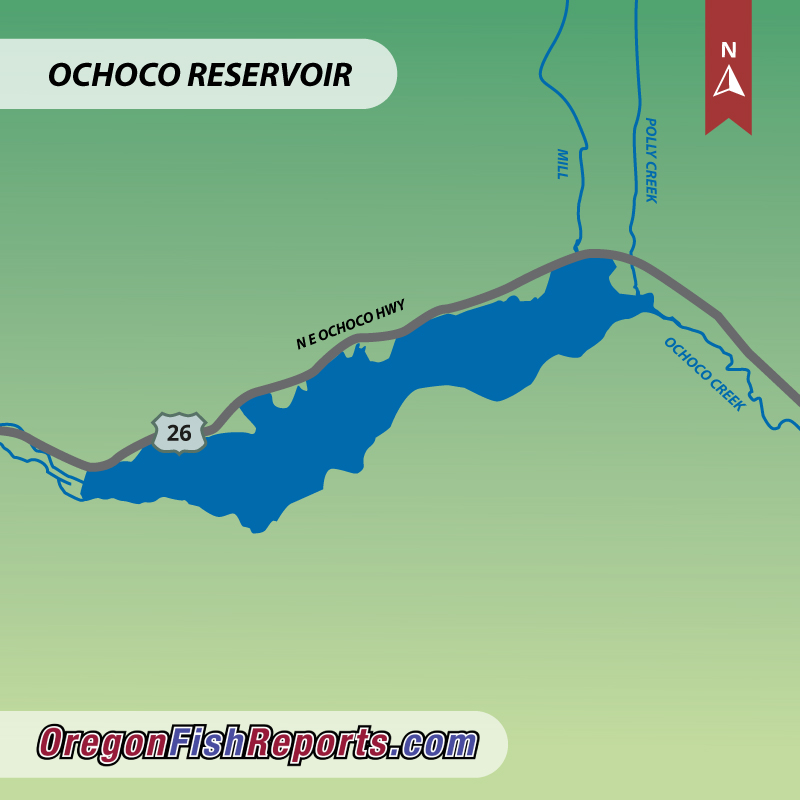
Detailed Map

www.OregonFishReports.com © 2026. All Rights Reserved.
Website Hosting and Design provided by TECK.net
Website Hosting and Design provided by TECK.net